Phishing Awareness: Four Habits to Keep SMPH Secure
As part of our ongoing commitment to safeguarding patient care, clinical research, and academic operations at the UW–Madison School of Medicine and Public Health, I want to share a brief reminder on staying vigilant against phishing.
Cybercriminals continually refine their tactics, often crafting emails that mimic routine administrative requests, IT alerts, or messages from trusted colleagues. Because compromised accounts are frequently used to send realistic follow-up scams, even messages coming from an @wisc.edu address warrant a second look.
Please keep these four core practices in mind as part of your daily inbox routine:
1. Verify @wisc.edu Senders: Do not assume an internal email address guarantees legitimacy. If you receive an unexpected or unusual message to your @wisc.edu account, check it against the UW–Madison Scam Alerts Subject Line Table before taking action.
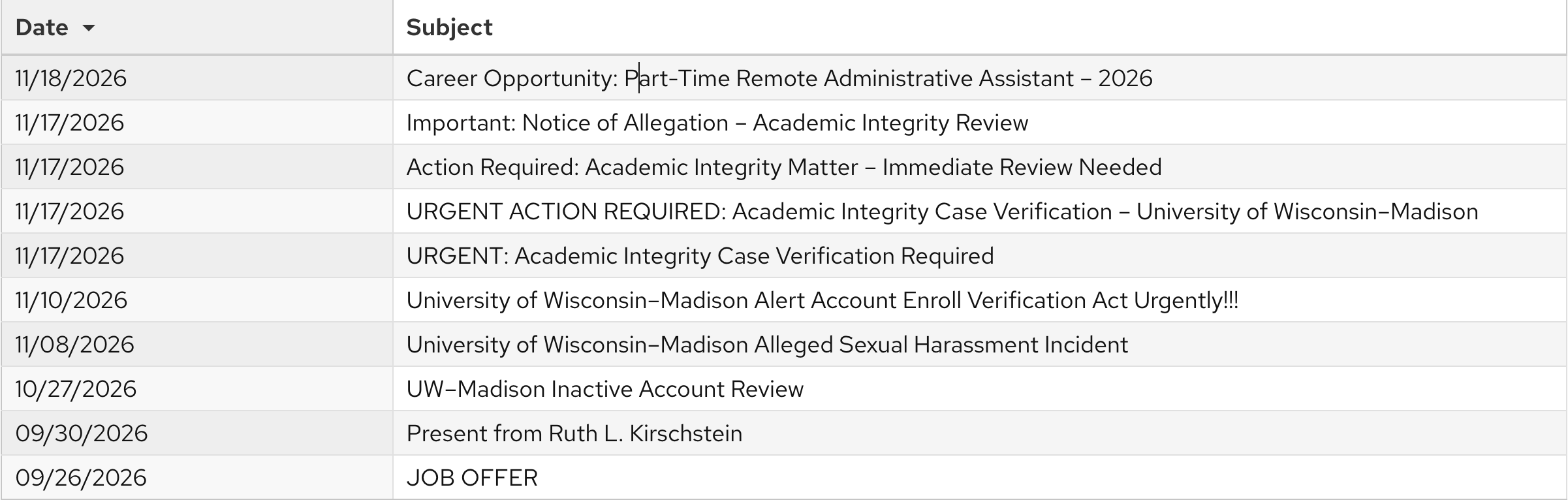
2. Pause at Artificial Urgency: Be cautious of messages that pressure you to act immediately, threaten account suspension, or ask for sensitive information, NetID passwords, or unexpected Duo/MFA approvals.
3. Hover Before You Click: Always hover your cursor over links to preview the actual destination web address. If the URL looks unfamiliar or you have any doubt, do not click it.
4. Report Immediately in Outlook—Do Not Engage: Never reply to a suspicious email or forward it to colleagues. Instead, select the message and click the Report Suspicious button in your Outlook toolbar. (If you cannot find the button, forward the message as an attachment to abuse@wisc.edu and delete it from your inbox).
For ongoing updates on active scams and quick tips on spotting red flags, please bookmark the UW–Madison IT Scam Alerts page and review the Guide to Recognizing and Reporting Phishing.
Thank you for your continued partnership in keeping our data, our research, and our community secure. If you ever have questions or suspect you may have clicked a link or shared credentials, please reach out to SMPH Cybersecurity right away.
Amy Diestler, MBA, CISA, GSLC
SMPH Chief Information Security Officer
SMPH HIPAA Security Coordinator
Information Technology – Cybersecurity
School of Medicine and Public Health (SMPH)
University of Wisconsin–Madison
